

By Brenda Pittman, CIH, CSP, Oregon-Columbia Chapter Certified Industrial Hygienist
 October 25–31 is National Lead Poisoning Prevention Week in the United States. This year’s theme is “Keep Kids Safe From Lead.” You can find extensive information, including steps to prevent childhood lead poisoning, here: National Lead Poisoning Prevention Week | US EPA.
Lead, a heavy metal mined from the earth, has been used in building materials for over a century. Building materials that could contain lead include:
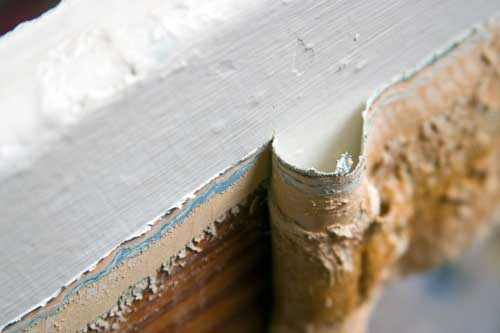
- Interior and exterior residential paint and varnish used on residential walls, trim, doors, and windows before it was banned for residential use in the United States in 1978.
- Commercial anti-following paints used on structural metal may still contain lead.
- Traffic line/legend paint used along roadways contained lead until the early 1990s.
- Sheet lead was used for roof valleys and flashing around chimneys, gutters, and cornices in older homes.
- Lead water pipe used in the interior of some homes built before 1986.
- Lead sheathing was frequently used to protect electrical cables and conduits in industrial or older commercial construction.
- Imported or domestic ceramic tiles used in bathrooms, kitchens, and flooring.
When lead-containing building materials are demolished, cut, abraded, drilled, or heated, they can release lead dust or fumes that can be inhaled. In addition, lead dust can be accidentally ingested if it is not washed from hands and face before eating, drinking, or smoking. Most of the lead that enters the adult body is excreted in urine or feces. Lead that remains in the body is distributed to organs including the brain, kidneys, liver, and bones. Lead is stored in the teeth and bones, where it accumulates over time. Lead stored in bone may be released back into the blood over time; this is especially dangerous during pregnancy and can expose a fetus.
Young children under the age of six years are particularly vulnerable to lead poisoning, as they may absorb up to 4–5 times as much lead as adults from an ingested dose. Moreover, children’s curiosity and their age-appropriate and frequent hand-to-mouth and object-to-mouth behaviors increase their risk of exposure to lead-contaminated dust, soil, and paint.
At lower levels of exposure that may have no obvious symptoms in a child, lead can lead to a spectrum of injury across multiple body systems. In particular, lead can permanently affect children’s brain development, resulting in reduced intelligence quotient (IQ), behavioral changes including reduced attention span and increased antisocial behavior, and reduced educational attainment. Lead exposure also causes anemia, hypertension, renal impairment, immunotoxicity, and toxicity to the reproductive organs. There is no known safe blood lead concentration for children; even blood lead concentrations as low as 3.5 micrograms per deciliter (µg/dL) may be associated with decreased intelligence, behavioral difficulties, and learning problems.
Although children are primarily exposed to lead from building materials in their homes, parents can sometimes bring lead dust from work on their clothing or body. If you work on projects with even low levels of lead, make sure you do not bring lead dust home where young children six years or younger are present. Keep work boots out of the house. and launder work clothes separately from children’s clothing. In addition, shower when you get home (before playing with your children) after working with or near lead-containing building materials.
Contractors in Oregon renovating pre-1978 homes or child-occupied (six years old or under) facilities where more than six feet of material will be disturbed inside, or 20 square feet or more of painted exterior surface must be certified in Lead-Based Paint Renovation (LBPR) by the Oregon Construction Contractors Board (CCB) and follow EPA lead-safe work practices if lead is present. Contractors must also complete Renovation, Repair, and Painting (RRP) certification, which includes an eight-hour training course in addition to holding a CCB lead license. Oregon Health Authority : Renovation, Repair and Painting (RRP) Rule : Lead Poisoning and Exposure to Lead : State of Oregon
If working under a general contractor, always ask if the building materials have been tested for lead, obtain a copy of the building report, and review rules before disturbing building materials that could contain lead, especially in a child-occupied facility or home.
Although this article focuses on protecting young children from lead, all employers, regardless of setting or scope of work, must comply with Oregon OSHA rules if lead materials are disturbed. Oregon Occupational Safety and Health : Lead : State of Oregon
Finally, if you live in a pre-1978 home with your young children, consider having your children’s blood tested for lead. Most pediatricians can easily administer this test. Also, check the paint/varnish on hardwood floors, window frames, and walls where your children sleep and play. Two kits are EPA-approved: this one, is appropriate for all surfaces, and this one, is best for latex-painted or varnished surfaces. You can find more information on the Oregon Health Authority website: Oregon Health Authority : Lead Poisoning in Oregon : Lead Poisoning and Exposure to Lead : State of Oregon.